From Fortune 100 finance and the 2008 financial crisis to publishing, Bitcoin, and nearly 600 conversations with technology founders, Jamil Hasan has spent decades studying what happens when systems change and how people adapt.
Success Grids | Exclusive Interview | Visionary Leaders 2026
Jamil Hasan is an author, publisher, and researcher whose career has moved through some of the most consequential shifts in finance and technology.
After spending more than two decades in Fortune 100 finance -including helping navigate the 2008 financial crisis at AIG – Hasan left corporate America in 2017 and entered the emerging world of Bitcoin.
That curiosity eventually led him to establish Crypto Hipster Publications, an independent publishing platform focused on books, podcasts, research, and the human stories behind technological change.
What captured his attention, however, was not simply the technology or its investment potential. It was the people building around it.
In this exclusive conversation with Success Grids, Hasan discusses trust, resilience, Bitcoin, Generation X, entrepreneurship, nearly 600 conversations with technology founders, and why he believes that no matter how sophisticated our systems become, people will always matter more.
From Fortune 100 Finance to Independent Publishing
Success Grids: Kindly introduce yourself and share a brief overview of your professional journey from Fortune 100 finance to becoming a full-time author and publisher.
Jamil Hasan: My career has been driven by a fascination with systems and the people behind them.
I spent over two decades in Fortune 100 finance, including helping navigate the 2008 financial crisis at AIG, where I learned how trust is tested under pressure.
After leaving corporate America in 2017, I discovered Bitcoin and became fascinated by the communities building new systems rather than the investment itself.
That curiosity led me to launch Crypto Hipster Publications, where I now research, interview, write, and publish books that explore the human side of technology, leadership, and societal change.
“My career has been driven by a fascination with systems and the people behind them.”
What the 2008 Financial Crisis Taught Him About Trust
Success Grids: You were right there on the ground floor during the 2008 financial crisis helping with the AIG bailout. How did that intense experience change how you view trust and major corporate systems?
Jamil Hasan: The 2008 financial crisis taught me that every system, no matter how large or sophisticated, ultimately depends on trust.
I watched talented people work tirelessly under extraordinary pressure, but I also saw how quickly confidence can erode when that trust is broken.
It changed the way I think about institutions. Strong systems are not defined by their size or technology but by the people responsible for maintaining them.
That lesson has shaped everything I’ve done since, from researching emerging technologies to writing about the human side of leadership, resilience, and change.
“Every system, no matter how large or sophisticated, ultimately depends on trust.”

Discovering the Human Side of Bitcoin
Success Grids: After leaving the corporate world in 2017, you got into Bitcoin. What made you see it as a tool for human connection and teamwork, rather than just a way to make money?
Jamil Hasan: I didn’t come to Bitcoin because it made me money. In fact, I’ve experienced my share of losses along the way.
What kept me engaged was discovering a global community of builders, entrepreneurs, and problem-solvers working together to create something they believed could improve the future.
As I met founders from around the world, I became far more interested in their journeys than in market prices.
Bitcoin introduced me to a network of people collaborating across borders, and those human connections ultimately proved more valuable than any investment return.
Building Crypto Hipster Publications
Success Grids: What inspired you to start Crypto Hipster Publications, and what is your main goal with the company today?
Jamil Hasan: Crypto Hipster Publications began out of necessity.
When Celsius froze customer accounts in 2022, I realized how vulnerable it was to rely on a single platform or business model.
Rather than walking away, I pivoted toward creating something I could fully own: an independent publishing company.
Today, my goal is to produce thoughtful books, podcasts, and research that focus on the people behind technology rather than the hype surrounding it.
I want to create work that remains meaningful long after today’s headlines and market cycles have faded.
KEY IDEA
SUBSTANCE OVER HYPE
Stories and ideas should remain valuable long after technologies, headlines, and market cycles change.
Why Adaptability Matters
Success Grids: A big theme in your work is how people adapt when the systems around them change. In simple terms, what does that mean to you?
Jamil Hasan: Change is inevitable, but how we respond to it is a choice.
Throughout my career, I’ve seen companies fail, technologies evolve, markets collapse, and entirely new industries emerge.
The people who thrive aren’t always the smartest; they’re the ones willing to learn, adapt, and keep moving forward.
That’s why my work focuses less on predicting the future and more on understanding the qualities that help people navigate uncertainty with resilience, curiosity, and integrity.
Those qualities endure long after any technology or system has changed.
“Change is inevitable, but how we respond to it is a choice.”
Nearly 600 Founders-and One Recurring Lesson
Success Grids: You have interviewed nearly 600 tech founders on your podcast. What is the biggest lesson you’ve learned from them about surviving tough times?
Jamil Hasan: The biggest lesson is that resilience matters more than perfection.
Nearly every founder I’ve interviewed has faced setbacks, rejection, failed ideas, or moments when it would have been easier to quit.
What separates those who succeed isn’t that they avoid adversity, but that they learn from it and keep building.
Innovation rarely follows a straight line.
The founders who create lasting impact are the ones who remain adaptable, stay true to their purpose, and continue moving forward despite uncertainty.
“Resilience matters more than perfection.”
Why the People Behind Technology Matter
Success Grids: Your books don’t focus on tech hype or market prices. Why is it more important to you to tell the human stories behind the technology?
Jamil Hasan: Technology doesn’t create human behavior-it reveals it.
Behind every blockchain, artificial intelligence platform, startup, or financial system are people making decisions, solving problems, and overcoming challenges.
Market prices and headlines eventually fade, but the lessons people learn while building something meaningful remain valuable.
That’s why I focus on the human stories.
I believe readers connect more deeply with authentic experiences than with technical specifications, and those stories continue to inspire long after today’s technologies have evolved.
People may discover my books because of technology, but I hope they remember them because of the people.
“People may discover my books because of technology, but I hope they remember them because of the people.”

Generation X in the Age of AI
Success Grids: As part of Generation X, you write about rebuilding the American Dream for your generation. What are the biggest challenges Gen X faces in today’s digital world?
Jamil Hasan: Generation X occupies a unique place in history.
We grew up in an analog world, built careers during the rise of the internet, and now find ourselves adapting to artificial intelligence and the digital economy.
Many of us are balancing careers, caring for aging parents, supporting children, and preparing for retirement-all while technology continues to reshape the workplace.
I believe our greatest strength is adaptability.
We’ve reinvented ourselves before, and we have the experience to help bridge generations as society continues to evolve.
Why Experience Should Never Be Defined by Age
Success Grids: You believe that actual skill and experience matter much more than a person’s age. How can modern companies do a better job of valuing experienced workers?
Jamil Hasan: Experience is one of the few assets that appreciates when it’s shared.
Modern companies should evaluate people based on their ability to solve problems, mentor others, and continue learning rather than on age alone.
The most successful organizations combine the fresh perspectives of younger employees with the judgment that comes from experience.
Innovation doesn’t require choosing one generation over another.
It happens when different generations respect one another and work together toward a common goal.
“Experience is one of the few assets that appreciates when it’s shared.”
People Are People: Technology Amplifies Human Choices
Success Grids: In your book People Are People, you look at the everyday individuals behind big tech platforms. What do you think society gets wrong about how technology affects our daily lives?
Jamil Hasan: I think we give technology either too much credit or too much blame.
Technology doesn’t make us more compassionate, dishonest, generous, or divided—it simply amplifies the choices people make.
Every platform, protocol, and application is ultimately shaped by human decisions and values.
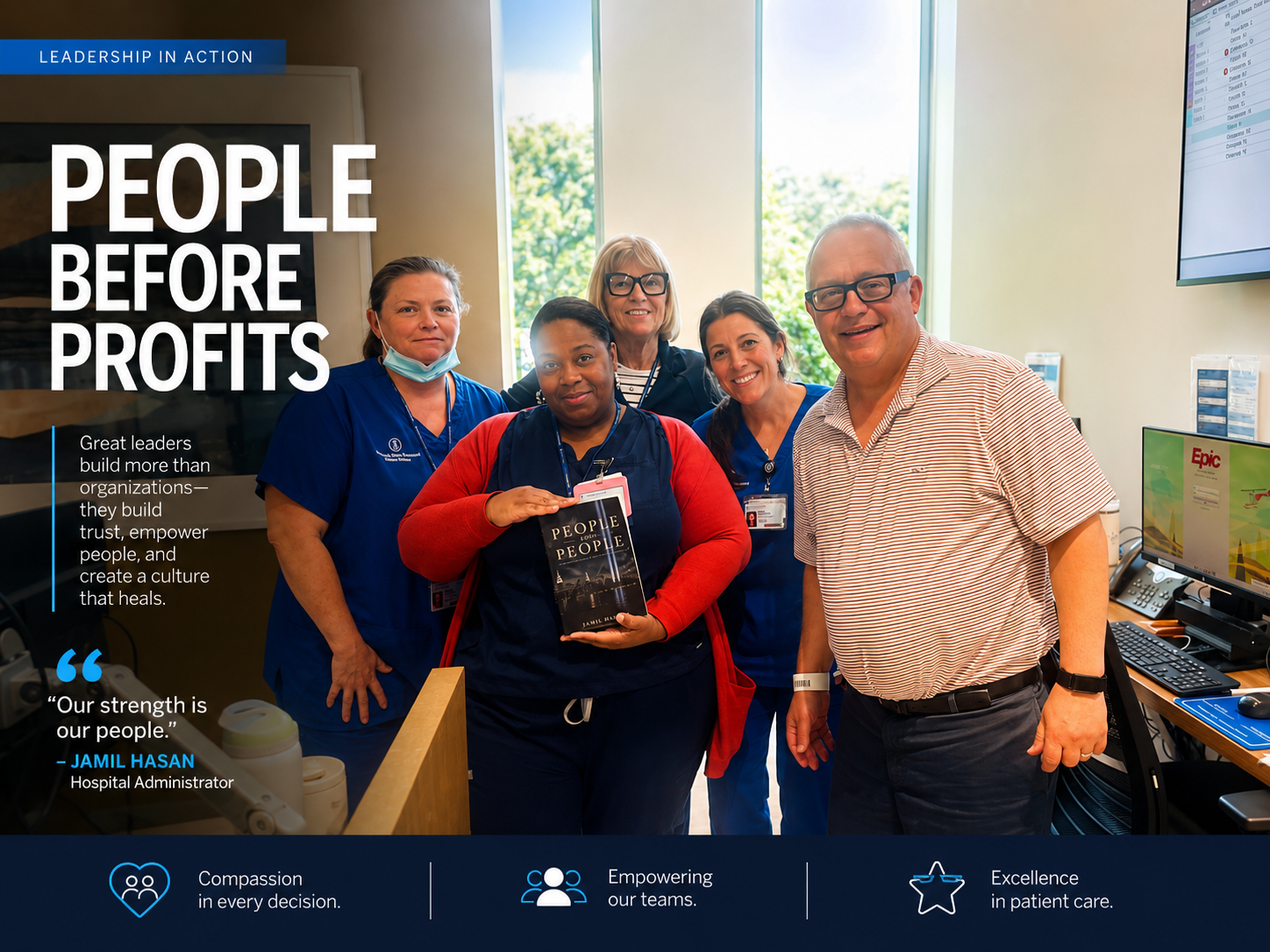
That’s why I wrote People Are People.
If we want better technology, we first need to better understand ourselves.
The future won’t be determined by algorithms alone, but by the character of the people who build and use them.
Leaving Corporate Stability Behind
Success Grids: Moving from a stable corporate job to building your own independent platform takes a lot of courage. What was the hardest part about making that switch?
Jamil Hasan: The hardest part was letting go of certainty.
In the corporate world, there was a clear career path, a predictable paycheck, and established systems to support you.
Building something independently meant accepting uncertainty and taking full responsibility for every success and failure.
Over time, I realized that freedom comes with accountability.
While the path has been less predictable, it has also been far more meaningful because I’m creating work that reflects my own values, curiosity, and long-term vision.
I’ve learned that security isn’t always found in stability; sometimes it’s found in the ability to adapt.
“Security isn’t always found in stability; sometimes it’s found in the ability to adapt.”
A Day in the Life of an Author, Podcaster, and Researcher
Success Grids: As an author, podcaster, and researcher, what does a normal, everyday workday look like for you?
Jamil Hasan: No two days are exactly alike, and I’ve learned to embrace that.
Most mornings begin with walking my dog, Daisy, followed by whatever the day requires, whether that’s writing, recording podcasts, editing manuscripts, conducting research, or interviewing founders.
My medical treatments have also taught me to stay flexible, so I build my schedule around what matters most and adjust when necessary.
I’m almost always multitasking, but my goal is simple:
Create something every day, make incremental progress, and maintain momentum.

Leadership as Service
Success Grids: You have supported the charity Children International for over 20 years. How does your passion for helping others shape the way you lead and work today?
Jamil Hasan: Supporting Children International for more than two decades has been a constant reminder that real success is measured by the lives we improve, not just the goals we achieve.
It has reinforced my belief that leadership is ultimately about service.
Whether I’m interviewing a founder, writing a book, or mentoring someone, I try to approach every interaction with empathy, respect, and a genuine desire to help others grow.
The greatest impact we can have often comes from investing in people over the long term.
“Real success is measured by the lives we improve, not just the goals we achieve.”
What’s Next for Crypto Hipster Publications?
Success Grids: Looking ahead, what are your biggest goals and plans for Crypto Hipster Publications in the coming years?
Jamil Hasan: My goal is to continue building a body of work that remains relevant long after today’s technologies and headlines have passed.
That means publishing thoughtful books, producing meaningful conversations through the Crypto Hipster Podcast, and exploring the intersection of technology, leadership, and the human experience.
I also want to continue giving independent founders and creators a platform to share their stories.
If Crypto Hipster Publications becomes known for substance over hype, I’ll consider that a success.
The Legacy: People Matter More Than Systems
Success Grids: When people read your books or listen to your podcast years from now, what is the main message or legacy you hope to leave behind?
Jamil Hasan: I hope people come away believing that while systems matter, people matter more.
Technologies will evolve, markets will rise and fall, and institutions will change, but character, curiosity, resilience, and service endure.
If my books and conversations encourage someone to think more deeply, treat others with greater dignity, or build something that improves the lives of others, then I’ve accomplished what I set out to do.
That’s the legacy I hope to leave behind.
“WHILE SYSTEMS MATTER, PEOPLE MATTER MORE.”
– Jamil Hasan