
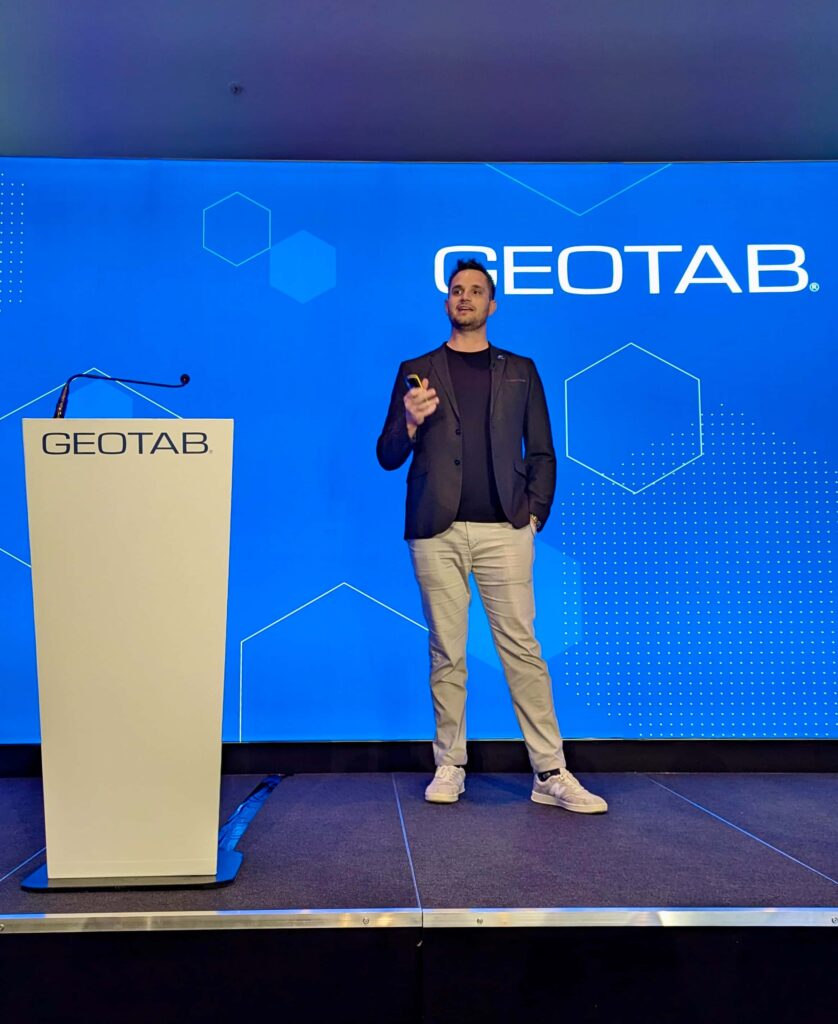
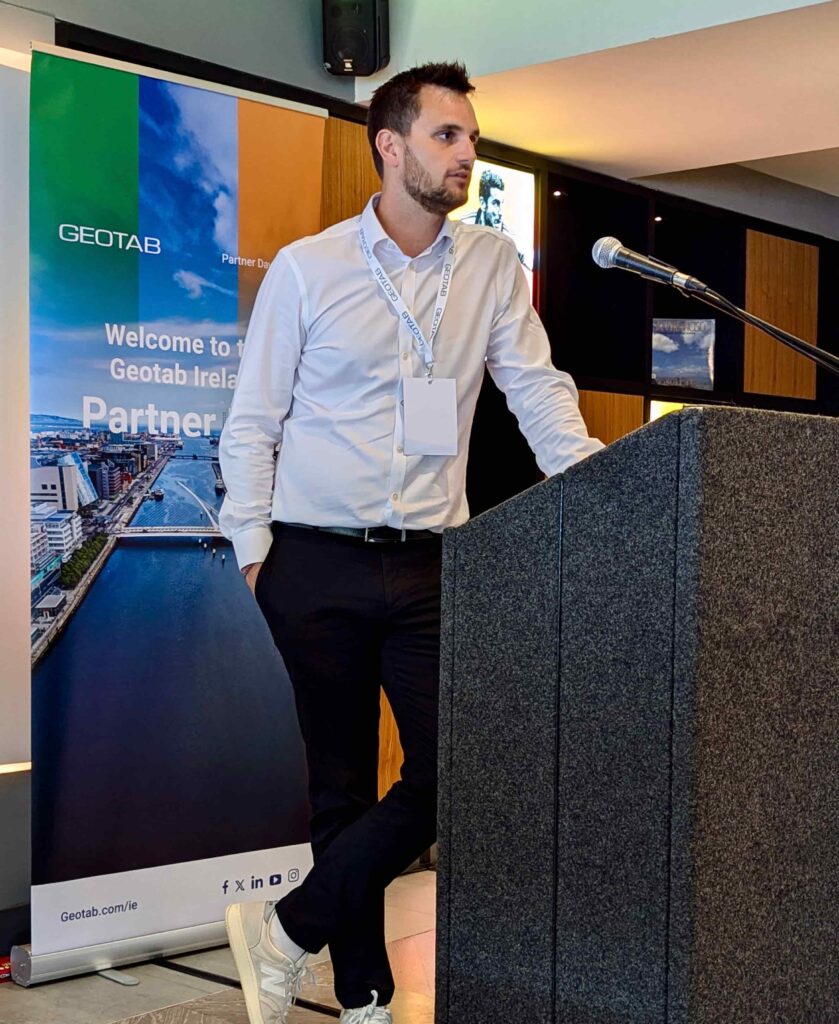
In a world where transportation, sustainability, and digital transformation are increasingly interconnected, leaders who can bridge technology and business strategy are shaping the future of mobility. Among those leaders is Aaron Jarvis, Vice President, EMEA at Geotab, one of the world’s leading connected vehicle and fleet management technology companies.
With more than a decade of experience in connected mobility, telematics, and IoT, Aaron has played a pivotal role in helping organizations leverage data-driven insights to improve safety, operational efficiency, sustainability, and business performance. From his early days at Vodafone to leading Geotab’s EMEA operations, his career reflects a deep commitment to innovation, customer success, and technological transformation.
A Career Built Around Connected Technology
Aaron’s journey began through Vodafone’s graduate program, where he first entered the world of technology and business development. Over time, he moved into IoT-focused roles before joining Vodafone Automotive, where he gained valuable experience managing connected vehicle products and global customer programs.
Working across multiple international markets gave him firsthand exposure to the complexities of diverse customer needs, cultural dynamics, and business environments. These experiences laid the foundation for a leadership style centered on collaboration, adaptability, and long-term relationship building.
His next chapter began at Geotab, where he initially focused on developing strategic relationships with major distribution partners before expanding into sales and business development leadership across the United Kingdom, Ireland, and eventually the broader EMEA region. Today, as Vice President EMEA, he leads initiatives focused on enterprise fleets, public sector organizations, and large-scale transportation operators.
Understanding Growth Across Diverse Markets
Leading business development across Europe, the Middle East, and Africa requires a nuanced understanding of regional differences.
According to Aaron, one of the most important leadership lessons is recognizing which business practices can be successfully replicated across markets and which require localized approaches.
Having worked extensively with customers around the world, he understands that trust, communication, and relationship-building often look different depending on the region. While technology remains important, long-term business success is frequently driven by personal relationships and meaningful collaboration.
For Aaron, growth is ultimately built on creating genuine connections among colleagues, partners, and customers while fostering a shared sense of purpose across geographically diverse teams.

Why Connected Mobility Matters
Aaron entered the connected vehicle industry more than a decade ago and has witnessed its evolution from basic machine-to-machine communication systems into sophisticated fleet intelligence platforms powered by real-time data and analytics.
What continues to motivate him is the tangible impact these technologies create.
Connected mobility solutions help organizations improve road safety, reduce environmental impact, optimize fleet operations, and protect drivers. Unlike many technology sectors where benefits can feel abstract, telematics often produces measurable outcomes that directly improve people’s lives.
Whether helping drivers return home safely or enabling organizations to reduce emissions, Aaron believes connected technology has become one of the most meaningful areas of innovation in modern business.
The Role of Data in Fleet Transformation
At the heart of every successful telematics program lies one critical asset: data.
Aaron emphasizes that data quality is the foundation upon which all meaningful insights are built. Organizations can only make effective decisions when the information they collect is accurate, reliable, and actionable.
Beyond technology itself, trust plays a central role in adoption. Successful fleet transformation occurs when operators, technology providers, and drivers work together to align people, processes, and technology around common goals.
This balanced approach ensures that innovation creates sustainable long-term value rather than short-term improvements.
Artificial Intelligence and the Future of Fleet Operations
Artificial Intelligence is rapidly transforming transportation and fleet management.
Aaron believes AI’s true value lies not in automation alone but in its ability to support better decision-making.
Modern fleet operators are increasingly leveraging AI for:
- Driver coaching and behavior improvement
- Predictive maintenance
- Route optimization
- Video telematics analysis
- Operational performance monitoring
- Risk management and incident prevention
These capabilities allow organizations to move from reactive management toward proactive decision-making, creating safer and more efficient transportation operations.
Importantly, Aaron sees AI as a tool that enhances human capabilities rather than replacing them. Organizations that effectively integrate AI into their workflows will gain significant competitive advantages in the years ahead.
Sustainability Through Operational Excellence
Sustainability has become a strategic priority for organizations worldwide.
Aaron believes the most effective sustainability initiatives are often rooted in operational improvements rather than environmental mandates alone.
By reducing idling, optimizing routes, improving driver behavior, and increasing fuel efficiency, fleets naturally lower emissions while simultaneously reducing costs.
Telematics technology makes these improvements measurable, allowing organizations to track environmental performance with precision and transparency.
This data-driven approach transforms sustainability from an abstract goal into a practical business outcome that delivers both environmental and financial benefits.
The Importance of Ecosystem Partnerships
No technology company succeeds in isolation.
Aaron views partnerships as essential to scaling innovation across complex international markets. Whether working with technology providers, distribution partners, or industry organizations, collaborative ecosystems enable faster innovation and broader market reach.
In regions as diverse as EMEA, partnerships help organizations navigate regulatory environments, customer expectations, and local market dynamics more effectively.
According to Aaron, some of the most impactful innovations emerge when organizations combine complementary capabilities and expertise.
Turning Complex Data into Actionable Insights
Connected fleets generate enormous volumes of information every day.
The challenge is not collecting data but transforming it into insights that decision-makers can easily understand and act upon.
Aaron believes modern analytics platforms and AI-powered tools play a critical role in simplifying complexity. By delivering the right information to the right people at the right time, organizations can make faster and more informed decisions.
This ability to convert raw data into operational intelligence is becoming one of the defining capabilities of successful fleet operators.
Building a Culture of Innovation
Leading teams across multiple countries requires more than strategy and technology.
Aaron places significant emphasis on culture, communication, and human connection.
He encourages informal conversations, spontaneous collaboration, and regular engagement beyond scheduled meetings. These interactions help build trust and create environments where ideas can flow freely across teams and regions.
For Aaron, innovation is not solely driven by technology—it is driven by people who feel connected, empowered, and invested in shared success.
Looking Ahead: The Next Decade of Mobility
The future of mobility is being shaped by several major trends, including electrification, artificial intelligence, predictive analytics, and connected vehicle ecosystems.
Aaron believes fleet operators will increasingly rely on sophisticated data platforms to manage electric vehicles at scale while AI becomes embedded into everyday operational workflows.
At the same time, the relationship between drivers and technology will continue evolving. Technologies once viewed primarily as monitoring tools are increasingly recognized as valuable resources that improve safety, provide protection, and support better working conditions.
Organizations that successfully combine technology, data, and human-centered leadership will be best positioned to thrive in the next generation of transportation.
Final Thoughts
Aaron Jarvis represents a new generation of technology leaders who understand that innovation is most powerful when it delivers measurable value to people and organizations.
Through his work at Geotab, he continues helping businesses leverage connected mobility, artificial intelligence, and data analytics to build safer, more efficient, and more sustainable transportation ecosystems.
As connected technology becomes increasingly central to global commerce and mobility, leaders like Aaron are demonstrating how data-driven innovation can create meaningful impact at scale.
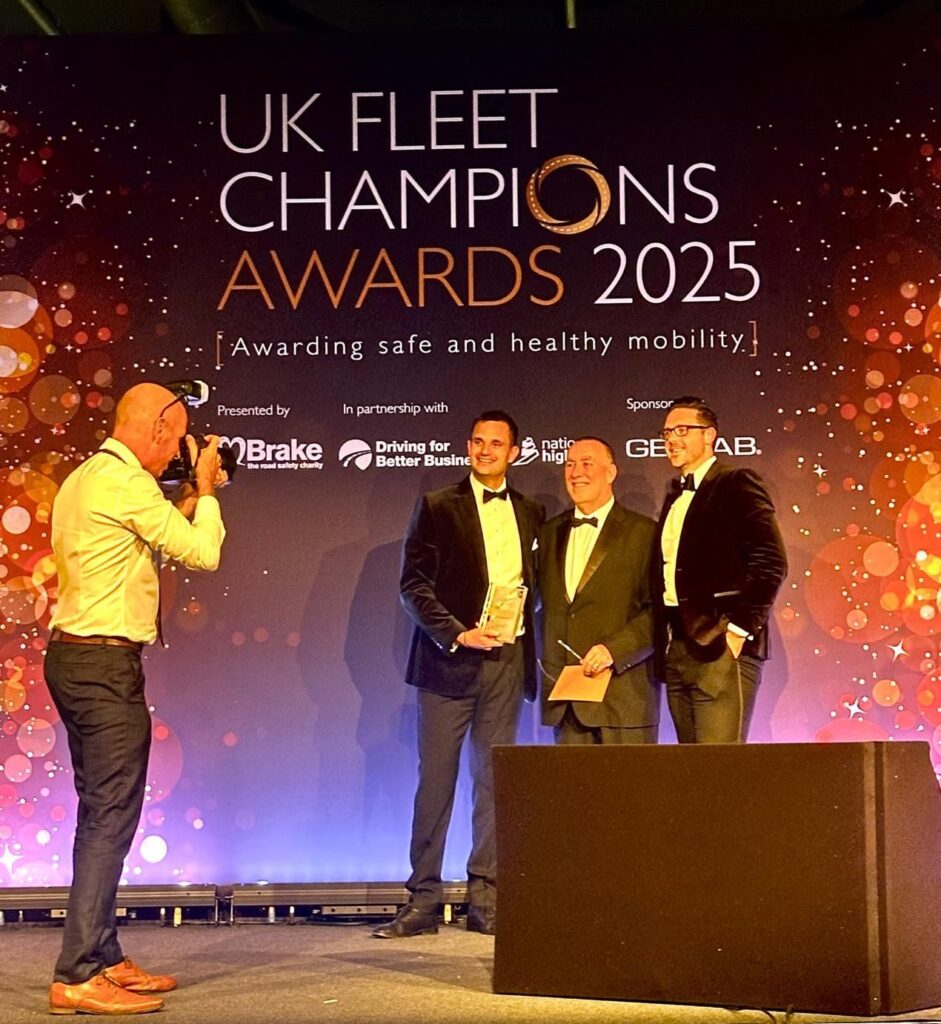

About Aaron Jarvis
Aaron Jarvis is Vice President, EMEA at Geotab, a global leader in connected vehicle and fleet management solutions. With over a decade of experience in connected mobility, telematics, IoT, and transportation technology, he leads strategic growth initiatives across Europe, the Middle East, and Africa while helping organizations leverage data, AI, and connected technology to improve safety, efficiency, and sustainability.